
The Use of AI in the Logistics World
Where AI Actually Shows Up
Logistics and AI – it’s kind of like watching a warehouse level up from “forklifts and clipboards” to something that feels suspiciously close to a sci-fi side quest. AI squeezes efficiency out of every corner, cuts costs, and finally gives all those dusty data silos something meaningful to do.
Machine learning, neural nets, the whole gang — they sift through mountains of data like it’s nothing. Suddenly you’re predicting demand instead of guessing, avoiding bottlenecks before they explode, and shaving minutes (and grey hairs) off delivery cycles. Less waiting, more doing. Customers love that. Operations teams love that. It’s one of the few true win-win scenarios.
Smarter Inventory, Fewer Midnight Fire Drills
AI-powered inventory systems track stock in real time and don’t panic when something sells out faster than expected. They chew through historical data, spot patterns you didn’t even know were there, and give you eerily accurate demand forecasts.
The result? No more overflowing shelves or awkward “sorry, we’re out” emails. Just a warehouse that finally behaves like it read the manual. And yeah — it saves money.
Route Planning Without the Guessing Game
This is where AI starts flexing. Real-time traffic. Weather. Road conditions. Sudden chaos that materializes out of nowhere. AI systems take all of it, run the math faster than a gamer speedrunning a boss fight, and spit out the shortest, cleanest route.
Roadblock? Accident? Angry goose on the highway? The system reroutes instantly. Drivers stay sane. Deliveries stay on time. Fuel bills stop looking like boss-level threats.
Warehouse Efficiency Without the Drama
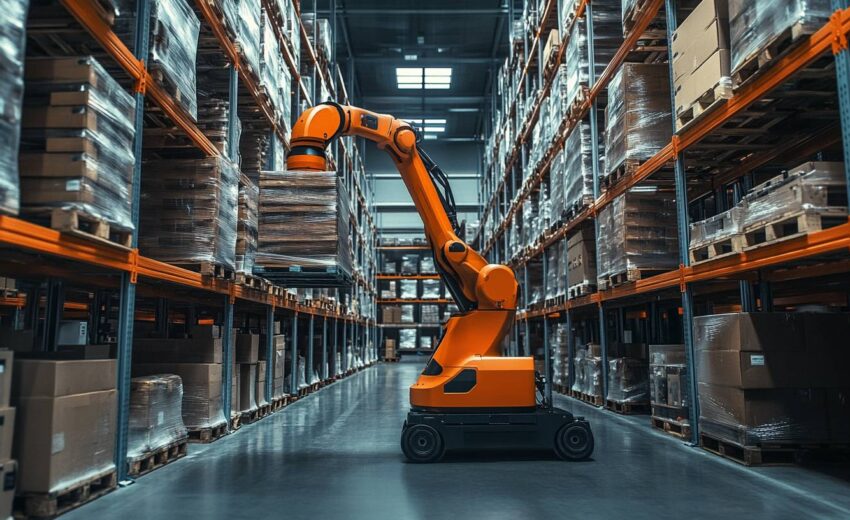
Picture robots doing the boring stuff — picking, packing, scanning — while AI orchestrates the whole ballet from above. No misplacements, no “where did that pallet disappear to?”, no manual inventory that feels like the world’s worst mini-game.
Some warehouses even let drones do stock checks. Yes, drones. They zip around, scan shelves, and save humans from climbing ladders at 6 AM. Hard to complain about that.
Because Safety Matters Too
AI doesn’t just optimize. It watches. Constantly. It spots weird behavior in warehouses or trucks long before humans would. Think of it as a very polite security guard who never sleeps.
Autonomous vehicles are sneaking into logistics too — fewer human errors, fewer accidents, more “hey, that actually worked” moments.
The Upside – Why AI Is Worth the Trouble
Saving Money Without Selling Your Soul
AI lets you forecast demand properly, plan resources without rolling dice, and fix routes so drivers spend less time stuck behind someone who forgot how to drive. Lower fuel costs, tighter planning, fewer expensive surprises.
All very unsexy, all very real.
Deliveries That Actually Arrive When You Say They Will
Real-time tracking plus machine learning equals way fewer angry customer emails. AI learns from past delays, weather, traffic, and a million other tiny things. The result? Shockingly accurate ETAs. Customers start trusting you again. Nice.
Better Use of Space (and Sanity)
AI figures out how to store things so your warehouse stops feeling like Tetris on hard mode. Smart placement, predictive restocking, fewer oops-moments. Storage becomes cleaner. Cheaper. Faster.
Automation, But Make It Useful
Robots + AI = fewer repetitive tasks for humans and fewer mistakes haunting your KPI dashboards. Predictive maintenance kicks in before machines die mid-shift, which saves everybody a ton of pain.
Transparency Without Needing Psychic Powers
Real-time data. Clean handovers. Clear visibility from start to finish.
Add blockchain to the mix and suddenly every transaction in your supply chain becomes traceable — less fraud, fewer “mysterious” shortages.
The Challenges – Because Nothing Comes for Free
Why Companies Still Hesitate
Let’s be honest: logistics isn’t exactly the “move fast and break things” industry. High investment costs, low tolerance for mistakes, and the ever-present fear that AI might mess with jobs — that’s enough to slow anyone down.
Integrating AI with old systems is… let’s call it “a character-building experience.” And no one wants to champion a project that might eat their job.
What You Actually Need to Get Started
A strong IT backbone. Clean, structured data (the kind that doesn’t look like it crawled out of a 1998 Excel file). People who know what they’re doing — data scientists, engineers, the works.
Without that? AI is just an expensive paperweight.
The Real Prerequisites
A data strategy that doesn’t look like spaghetti. Stakeholders who are on board instead of rolling their eyes. A culture that can handle change without full system meltdown.
AI works when the people behind it do too.
The Hard Parts
Security. Privacy. Compliance. Especially in Europe. You can’t just YOLO customer data because the algorithm looked hungry.
And then there’s the integration nightmare — aging legacy systems that scream every time you plug something new into them. Plus the training, the relearning, the inevitable “why is this button here now?!”
The Human Fallout
AI removes repetitive tasks, but it also forces people to adapt. Fast. Some jobs vanish, others evolve, all of them require new skills. Training becomes as essential as electricity in the warehouse.
Handled well, AI empowers people. Handled poorly, it freaks them out.
Available AI Tools & What They’re Good For
What’s Out There
Predictive analytics, warehouse robots, smart traffic systems, ML models that swallow data by the terabyte — logistics has no shortage of toys. The trick isn’t finding tools. It’s choosing the ones that actually solve your problem instead of creating five new ones.
The Tech You See Everywhere
Machine learning for forecasting. Neural networks for routing. NLP for customer communication and support.
Chatbots that don’t sound like they were coded in 2004? Yes, those exist now.
Communication That Doesn’t Hurt
AI chatbots handle simple questions, freeing humans for the complicated stuff. Real-time translation breaks down language barriers. Teams collaborate without needing a glossary or a séance.
Actual Use Cases, Not Just Buzzwords
Route optimization. Warehouse automation. Predictive maintenance. All the things logistics teams secretly wish they had 10 years ago — now they’re here, and they actually work.
More Flexibility Than You’d Expect
AI makes supply chains less rigid. Forecasts get sharper. Inventory adapts faster. Customer experiences feel customized instead of cookie-cutter.
Basically: less chaos, more control.
Long-Term Impact – Where This Is All Going
Supply Chain Monitoring on Steroids
Real-time insights across everything from IoT sensors to GPS data. Bottlenecks spotted early. Issues fixed before they explode. A supply chain that finally feels alive and aware.
Sustainability That’s Actually Achievable
Optimized routes = fewer emissions.
Better forecasting = less waste.
Smarter warehouse energy usage = greener operations.
AI helps logistics go eco-friendly without greenwashing.
Fewer Mistakes, More Sanity
Automation kills human error. Predictive analytics prevents problems before they happen. And the overall system gets more accurate, more reliable, and slightly less stressful for everyone involved.
The Future (Spoiler: It’s Automated)
Autonomous trucks. Delivery drones. Smarter robots. And data-driven insights for everything in between.
New business models will pop up. Old ones will get a serious upgrade. Logistics will get faster, cleaner, and a lot more interesting.
And Yes, Better Profit Margins
Lower costs. Better planning. Cleaner forecasts. Less downtime. Higher ROI. AI doesn’t replace strategy — but it makes your strategy a whole lot more effective.
AI isn’t magic. It’s engineering, duct tape, and just enough stubbornness to make the impossible behave.
Hermann del Campo